Why the valley needs them more often
A conventional system relies on several feet of unsaturated soil under the field to finish treating wastewater. Near the Rio Grande, groundwater can be closer to the surface, and many homes draw drinking water from shallow wells. Where there isn't enough separation or the lot is small, New Mexico's rules may require an advanced system.
How they work
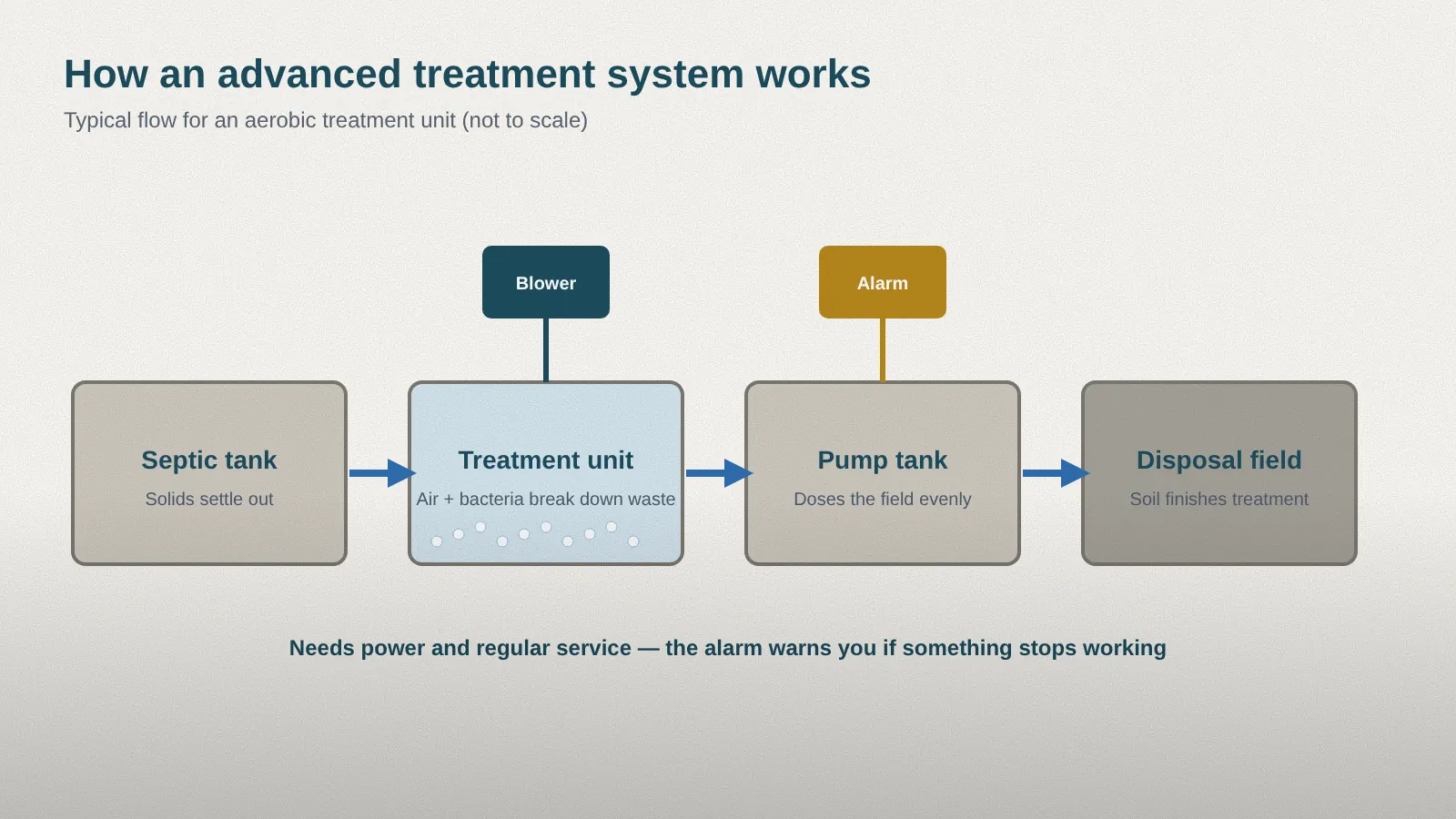
After the septic tank, a treatment unit adds air and bacteria (or passes effluent through filter media) to break down much more of the waste. A pump tank then doses the field evenly. See how advanced units work.
Living with one
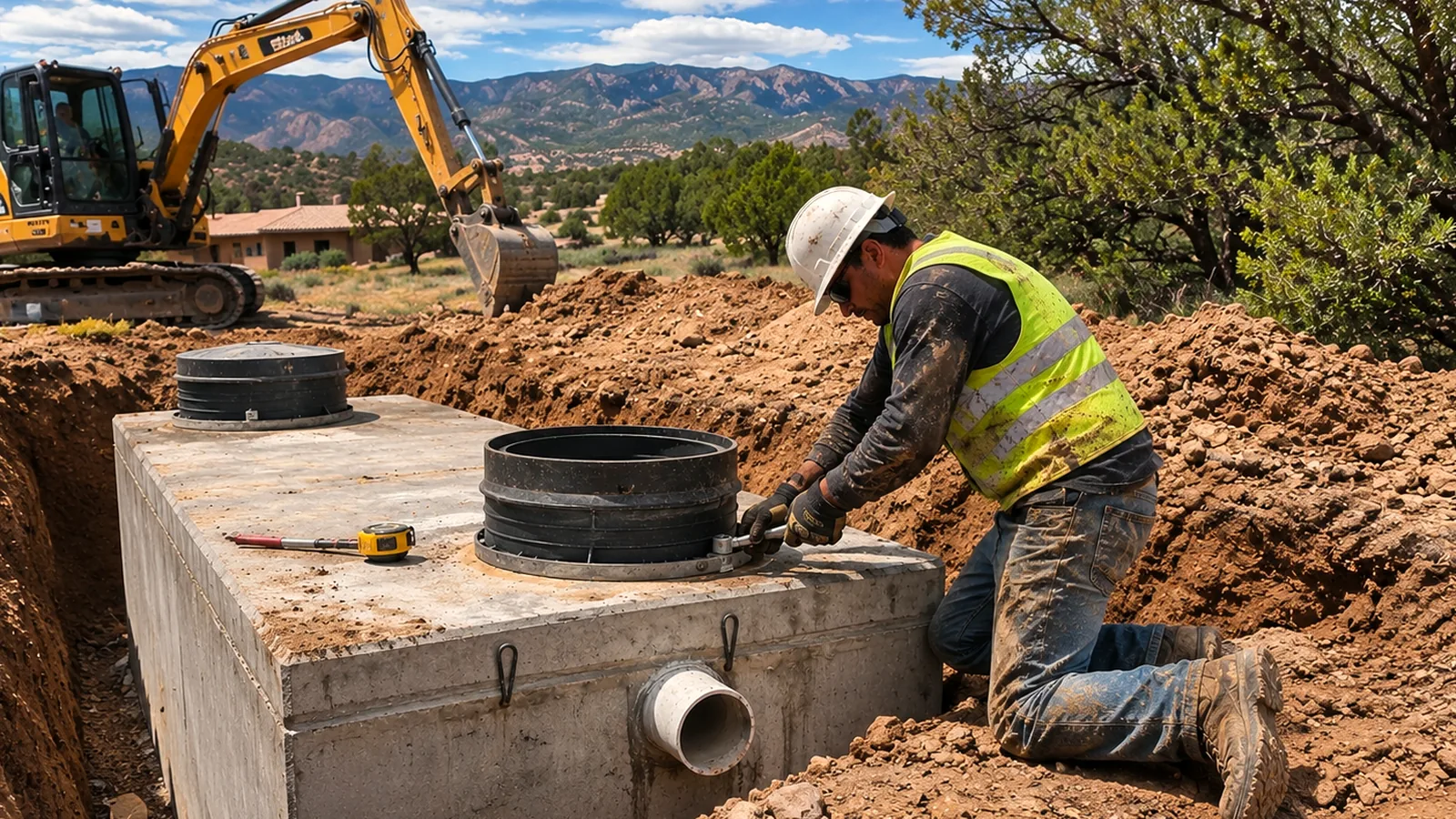
- Power for blowers and pumps
- An alarm that tells you if something stops
- Regular service, often under a maintenance agreement
- Pumping of the septic tank, like any system
Cost
More than a conventional system up front, plus service costs. Knowing early helps — especially if you're buying land. See advanced septic in Corrales.
Common questions
Why does my lot need advanced treatment?
Usually shallow groundwater, small lot size or soil conditions. The permit review explains which.
Is it noisy?
Blowers make a low hum; units are usually buried with the blower in a small housing.
What if I skip maintenance?
Performance drops and the field can fail. Service is part of ownership.