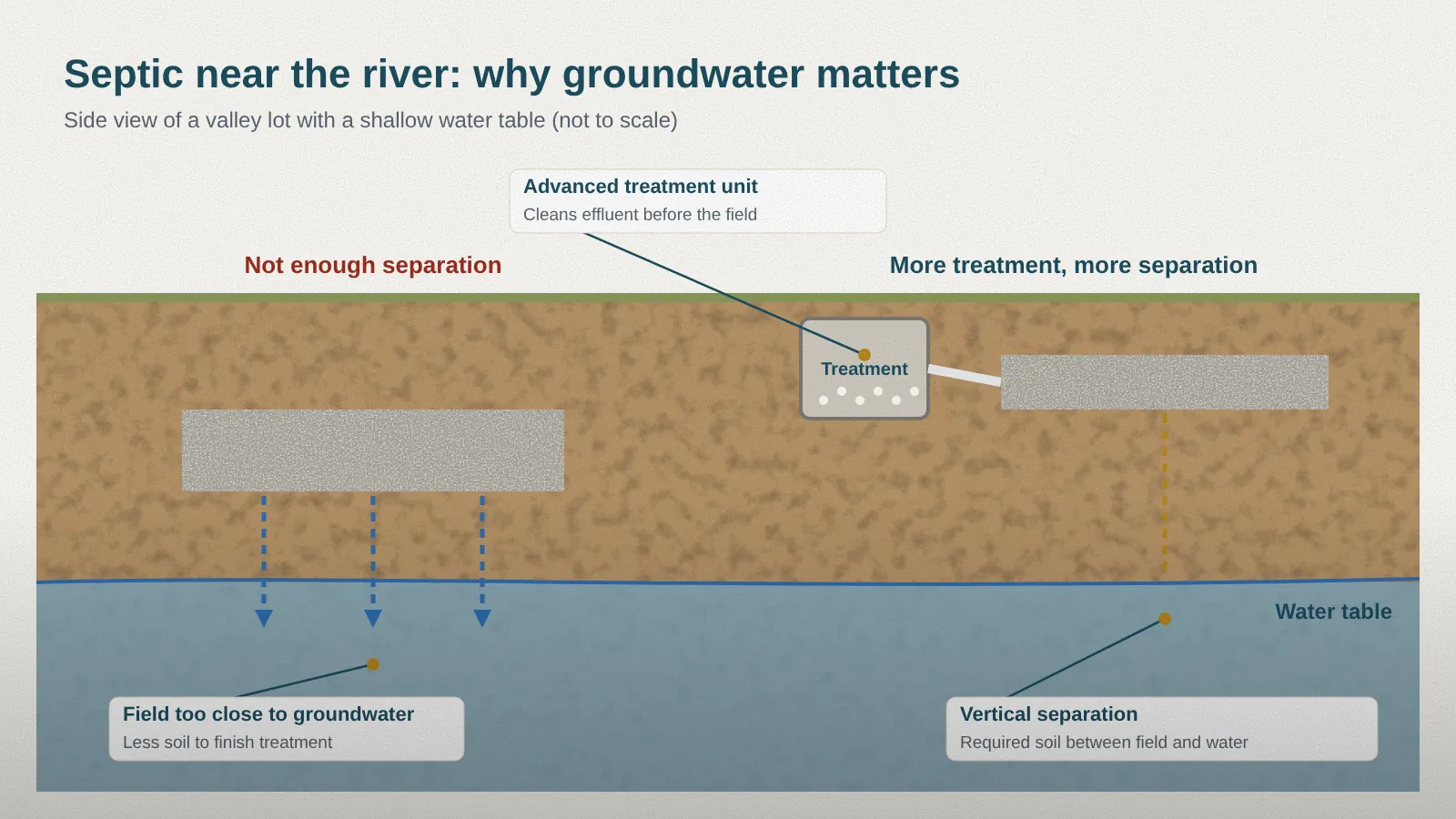
What "high water table" means for septic
Drain fields need a layer of dry soil between the bottom of the trench and groundwater. That soil is where most of the treatment happens. When groundwater is shallow, there's less room — and the rules require a design that still protects it.
Common approaches
| Approach | What it does |
|---|---|
| Shallower trenches | Keeps the field higher above groundwater |
| Advanced treatment | Cleans effluent before it reaches the soil |
| Pressure dosing | Spreads effluent evenly across the field |
| Field placement | Uses the highest, driest part of the lot |
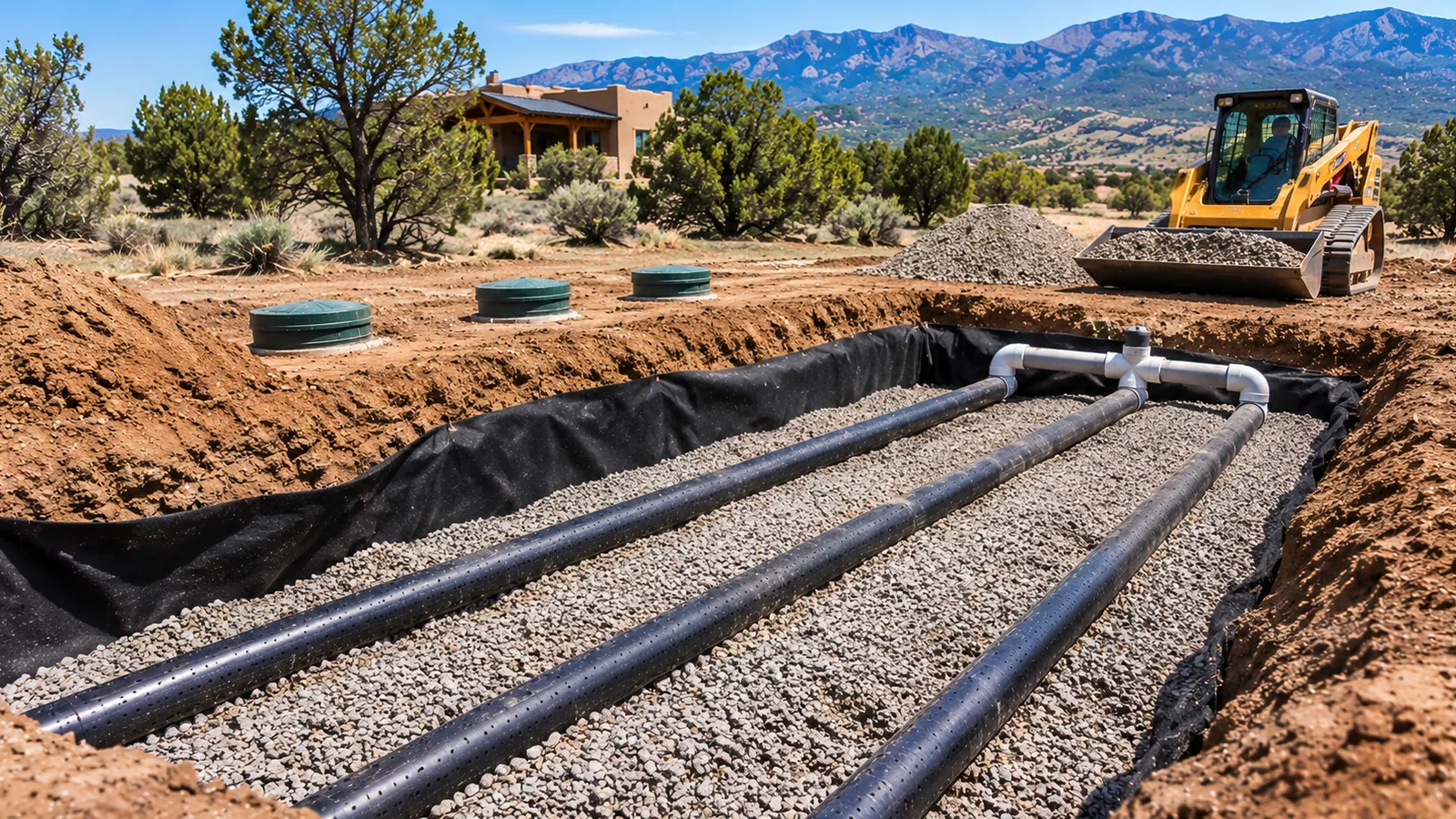
Seasonal changes
Groundwater near the river can rise and fall through the year, including during irrigation season. Site evaluations look for signs of the highest seasonal level, not just what's there on one day.
Tanks in wet ground
Tanks set in high groundwater must be watertight and installed so they won't float when pumped. See groundwater and septic.
Common questions
How do I know if my groundwater is shallow?
A site evaluation looks at soil layers and signs of seasonal water.
Can I still build on a lot with high groundwater?
Often, with the right system design.
Does irrigation season matter?
It can raise groundwater locally, which is considered in the design.