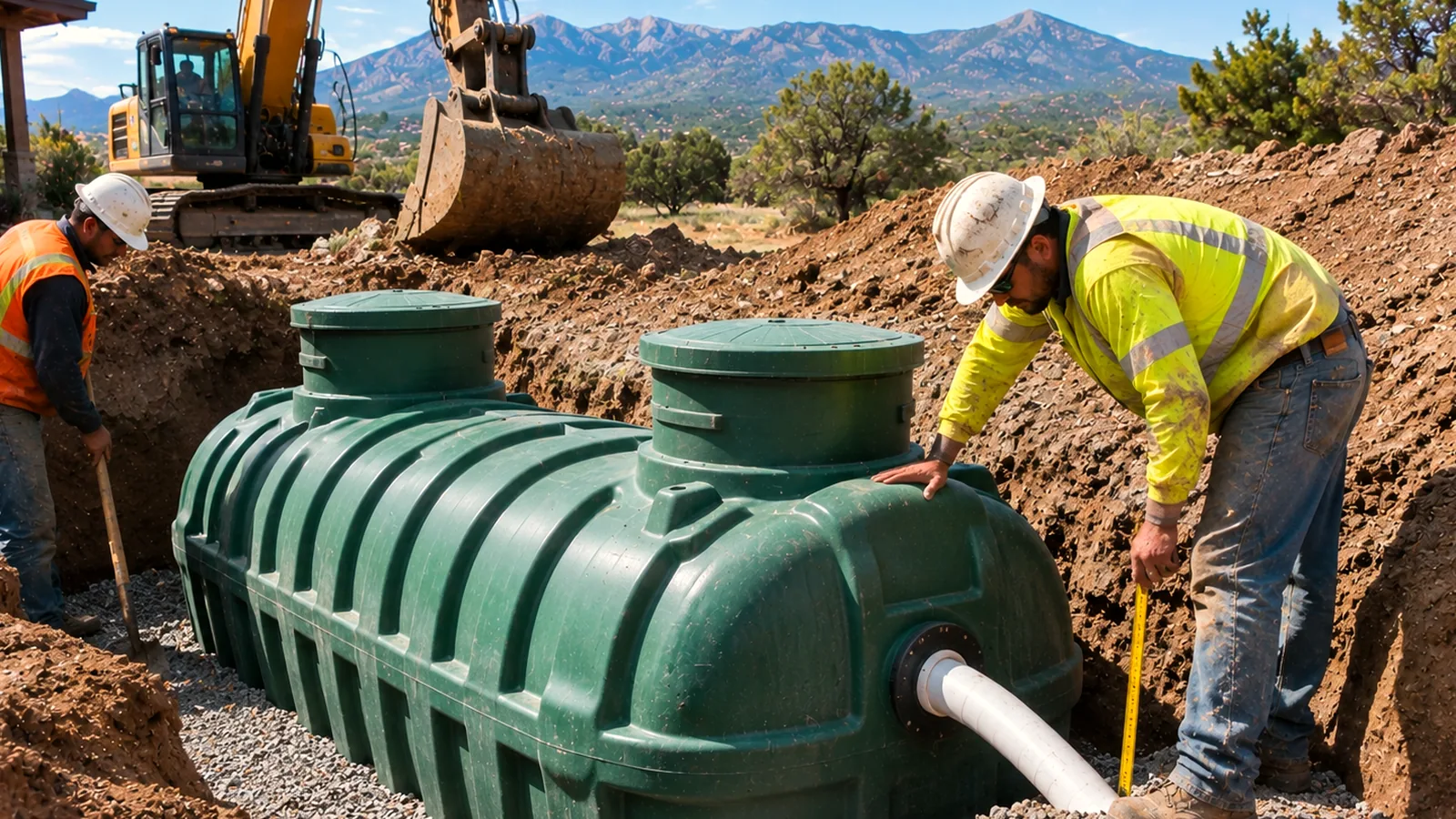
Signs the tank is the problem
- Old steel tank — these rust through over time
- Cracks letting groundwater in or sewage out
- Missing or broken baffles, sending solids to the field
- A tank that's too small for the house as it is now
- Soil collapsing around or over the tank
What replacement includes
- Pump out and remove or properly abandon the old tank
- Set a new tank on a level base
- Reconnect the inlet and outlet
- Add risers and an effluent filter
- Inspection, backfill and grading
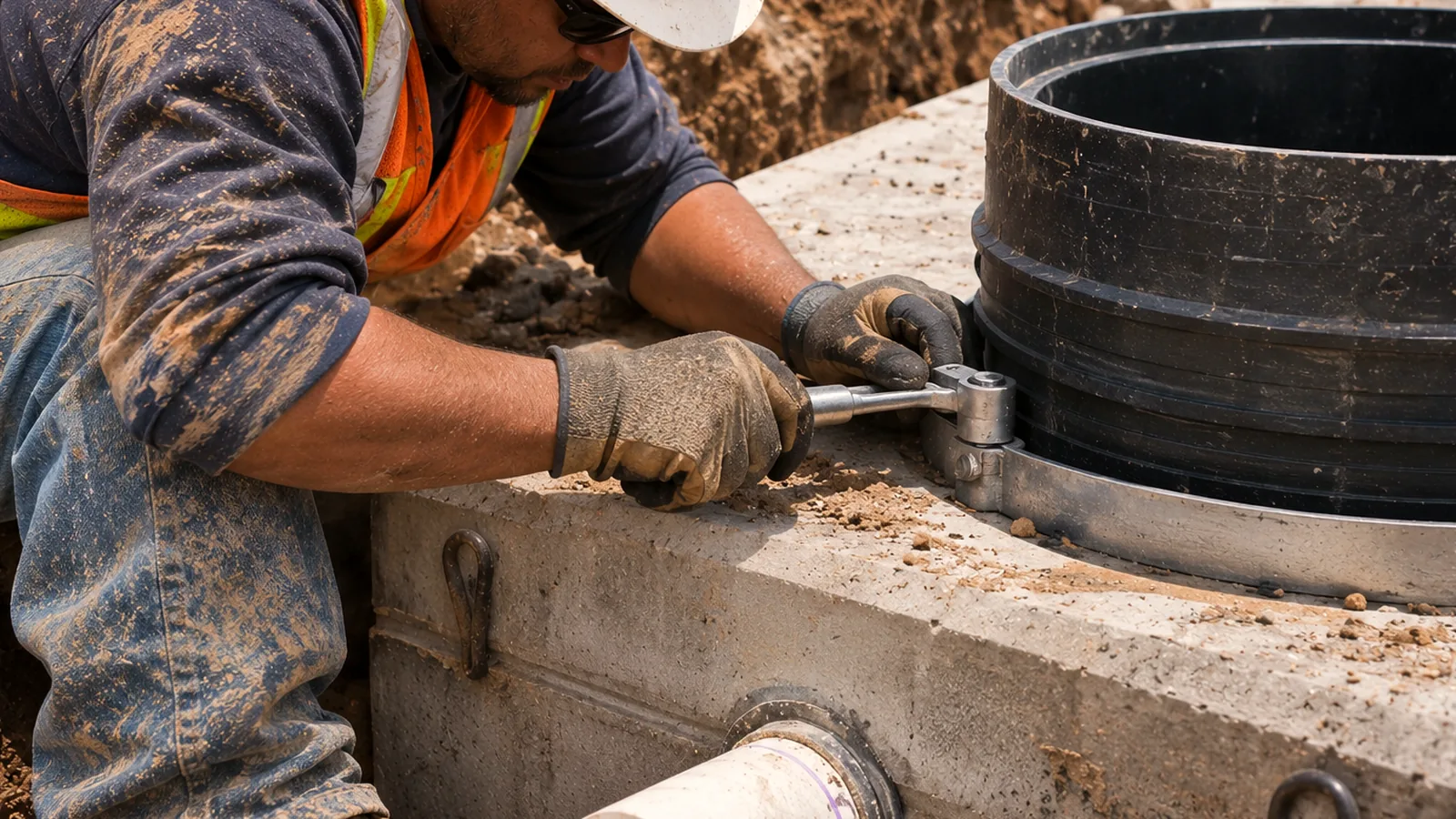
Concrete or poly
Concrete
Heavy, durable and resists floating where groundwater is high.
Polyethylene
Lighter and easier to get into tight back yards; must be anchored or installed to resist flotation where needed.
Check the field at the same time
If solids have been washing out of a failing tank, the drain field may be damaged too. We look at both.
Common questions
Can I replace the tank without a new field?
Often, if the field is still in good shape.
What happens to the old tank?
It's removed or abandoned according to the rules — pumped, and crushed or filled.
Can high groundwater float a tank?
Yes, especially lighter tanks. That's planned for in the install.