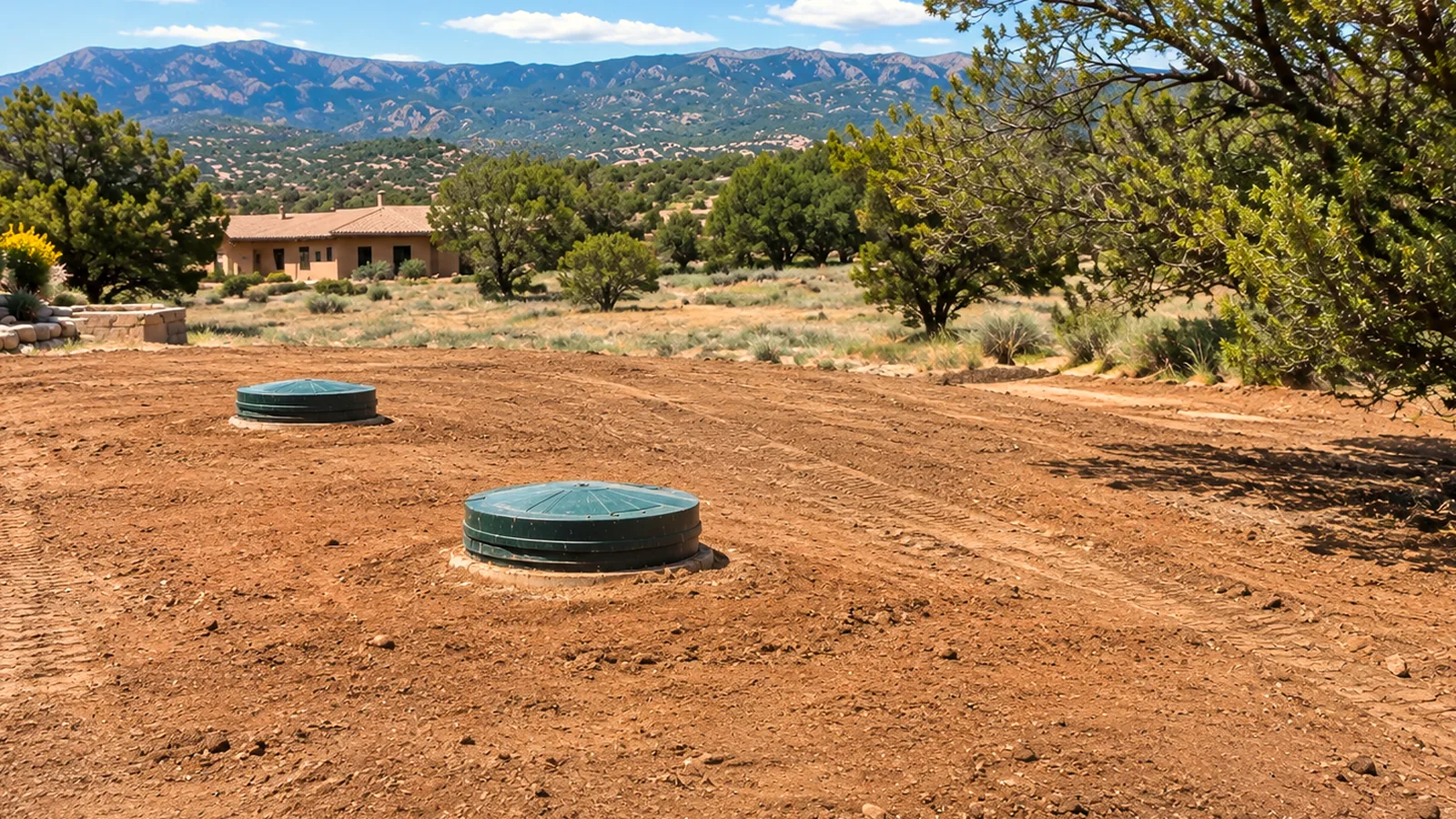
A starting point
| Tank size | 1–2 people | 3–4 people | 5+ people |
|---|---|---|---|
| 1,000 gallons | about every 5 years | about every 3 years | about every 2 years |
| 1,250 gallons | about every 6 years | about every 4 years | about every 2–3 years |
| 1,500 gallons | about every 7 years | about every 5 years | about every 3 years |
These are rough guides. Garbage disposals, frequent guests, home businesses and water softeners shorten the interval. A pumper can measure your sludge and scum layers and tell you what your tank actually needs.
Why it matters
The tank's job is to hold solids. When it fills with sludge, solids flow out to the drain field and clog the soil — and a new drain field costs many times more than decades of pumping. See septic costs in Corrales.
What pumping costs
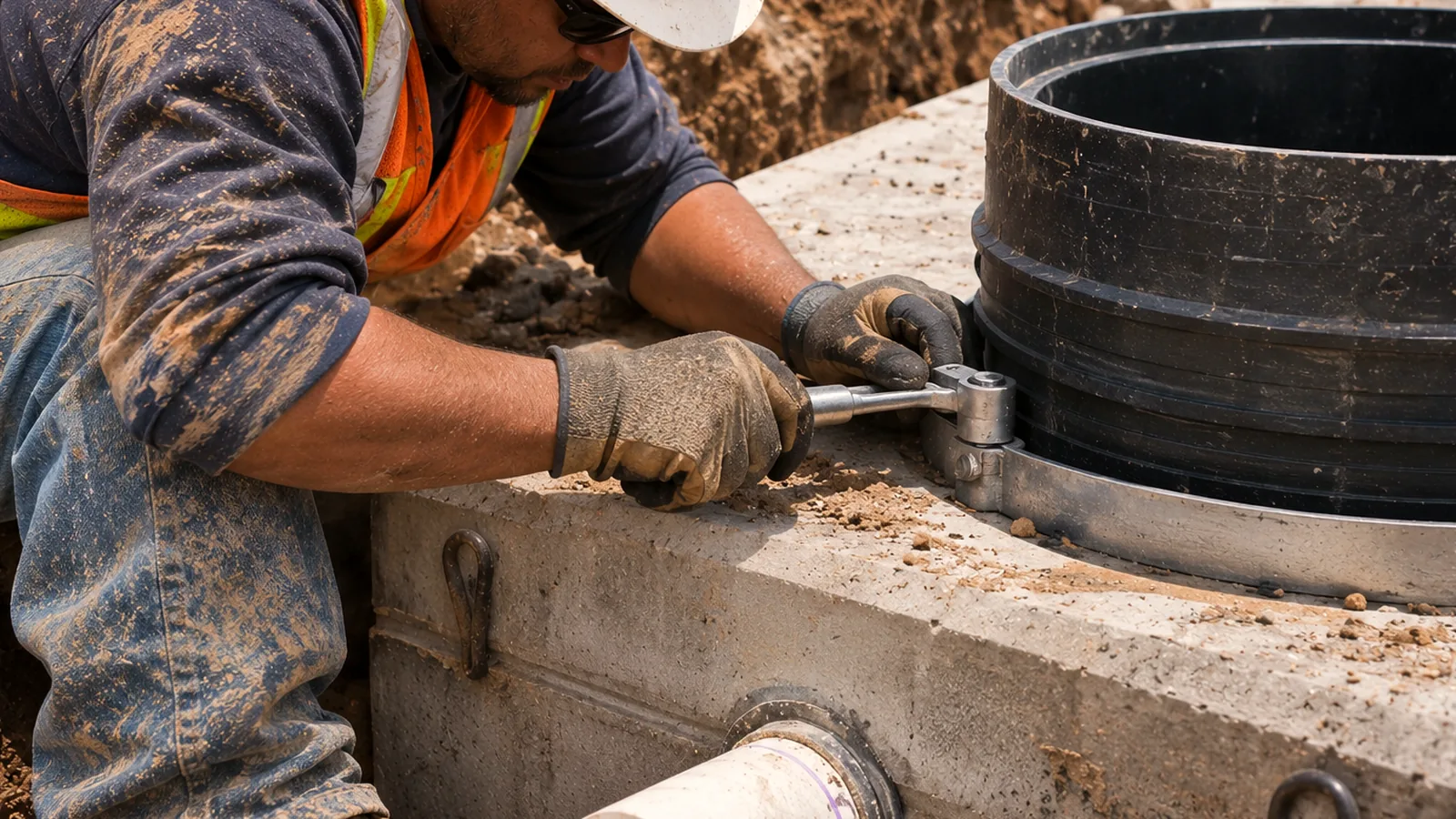
Routine pumping commonly runs a few hundred dollars, more if lids are buried, the tank is large, or the truck has to go far. Installing risers makes every future pumping faster and cheaper.
Valley tips
- Schedule pumping outside peak irrigation when groundwater is lower, if your tank sits in a high-water area — ask the pumper.
- Keep records of each pumping and the levels found. Buyers ask for them.
- Clean the effluent filter at every pumping, or more often.
- Advanced treatment units follow their own service schedule — see how advanced units work.
Signs you're overdue
- Slow drains or gurgling
- Odors near the tank
- Wet spots over the tank or field
- Backups in the lowest drain
Pumping is maintenance; if your tank or field needs repair, call (505) 510-5271.
Common questions
Can you pump a septic tank too often?
Pumping more often than needed doesn't hurt the system; it just costs more than necessary.
Do I need to be home for pumping?
Usually not, if the lids are accessible and the pumper knows where the tank is.
Should the tank be refilled after pumping?
It refills naturally with normal use within days to weeks.